
I have been bullied, and I want to tell you about it.
Zoe Sinclair · 6 October 2026 · 5 min read
A personal account of the hidden impact of bullying, how it can shake your confidence and why telling someone can be the first step towards finding support.
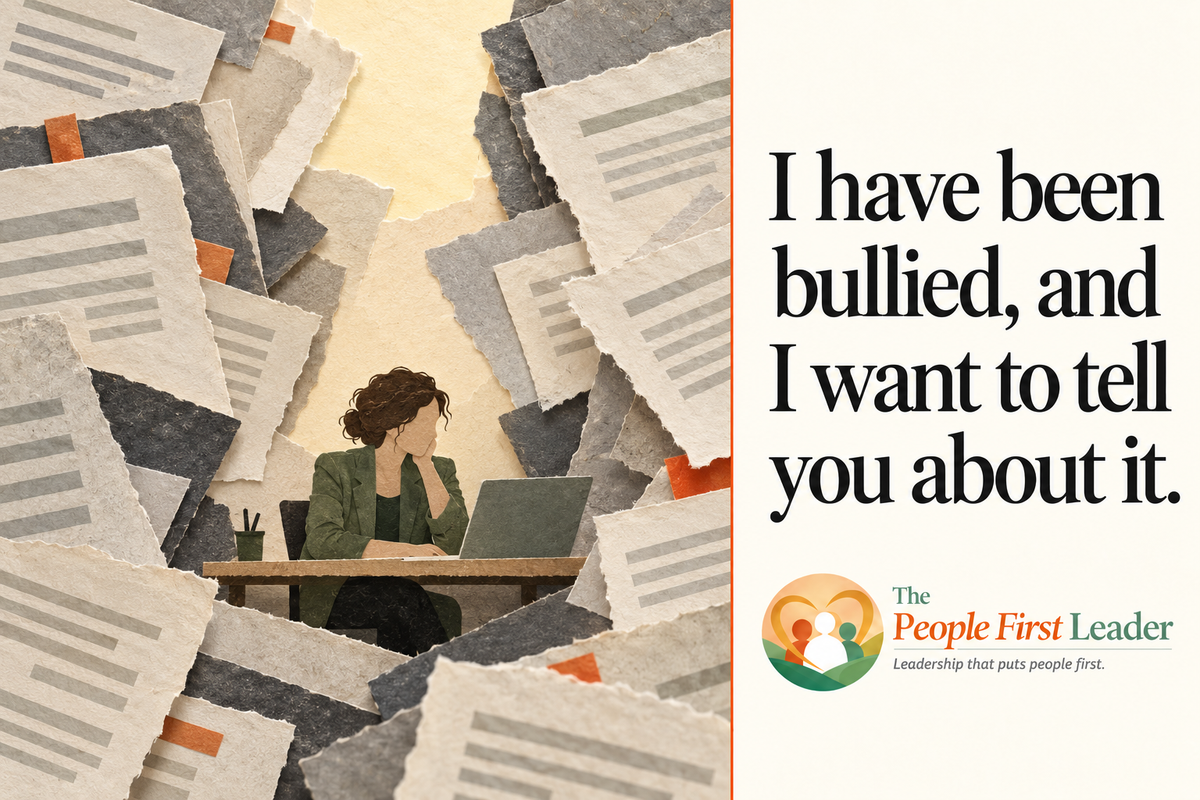
I have been bullied, and I want to tell you about it.
I did not see it coming.
That is the thing about bullying that nobody tells you. You are not expecting it. You are going about your life and then something just happens. You can’t quite name it at first. You just know that something does not feel right.
I am writing this because I found that the most powerful thing to do was to share it with others.
What it actually felt like
I stopped sleeping properly. Not dramatically but just the kind of low-level, persistent wakefulness where your mind will not switch off. Three o'clock in the morning and you are going over the same emails, asking yourself what you did wrong and whether there is something you missed.
The self-doubt came next. I have been in professional life for more than two decades. I run a business. I know who I am and what I stand for. And yet something about sustained, targeted pressure has a way of getting under that. It makes you question your own judgement. You start to wonder whether they are right. Whether you are the problem.
That is what bullying does. It is not just the incident, or in my case the emails. It is the accumulation. The way it sits in the background of everything else you are trying to do.
And here is the part I think is important to say out loud: I did not recognise it as bullying straight away. I kept trying to manage it. I kept trying to respond constructively, professionally and with good faith. I kept thinking that if I just handled it correctly, it would resolve but it did not.
The statistics are not abstract
I work in workplace wellbeing. I know the data. I have shared it from stages and in newsletters and in rooms full of people who nod along. And still, when it happened to me, it took me a while to connect the lived experience to the language I already knew.
Nearly a third of people in the UK will experience bullying at work or in a professional context at some point in their lives. The CIPD tells us that one in four employees has been bullied in the last three years. Research consistently shows that the impact on mental health is significant: anxiety, depression, sleep disruption, loss of confidence, reduced performance. Not because the person is weak. Because they are human.
Bullying does not always look like shouting. It does not always look like what we were warned about at school. It can be sophisticated, sustained and dressed up in formal language. It can come from a direction you did not expect from people who are intelligent and strategic and who know exactly what they are doing.
And it can come from a direction you genuinely did not anticipate. That is one of the things that caught me most off guard. I think I have always carried an image of a bully but it does not always come from where we expect. Sometimes it comes from people who appear reasonable on the surface, who have status or credibility, who others might not question. That mismatch between how the situation looks from the outside and how it feels from the inside is disorienting in a way that is very difficult to describe.
The moment everything changed
I told someone.
I cannot overstate how much that mattered. Not because telling someone fixed it or because the situation immediately resolved. But because the weight of carrying it alone had been extraordinary, and I had not fully understood how heavy it was until I set it down.
Before I told someone, I could not hear anything properly. I could not take in advice. I could not think clearly about next steps. I was entirely inside the experience, with no perspective on it.
Sharing it changed that. I could hear what people were saying to me and I could take action. I could start to see it clearly rather than through the distorted lens of someone who has been absorbing something difficult entirely alone.
What this has taught me about being a leader
Leadership does not protect you from this. That is the thing I want to say clearly to every person reading this who holds a senior role, who runs a team, who carries responsibility for others.
If anything, leadership can make it harder to acknowledge. Because we are supposed to be the ones with the answers. We are supposed to be steady. We are supposed to model composure and resilience and all of the things we ask of our teams.
But I am learning that the willingness to say “I am struggling with something” is not a failure of leadership.
What I have learnt from this experience is that the organisations that take bullying seriously, not just in policy documents, are the ones where people feel safe enough to name what is happening to them. If you haven’t heard of bullying, does that mean it’s not happening or does that mean that people don’t feel safe enough to say it out loud to you?
As leaders, we set that culture. Every day.
If you are in this right now
I want to speak directly to the person who recognises something in what I have written.
To the person who is not sleeping and is going over the same conversation at three in the morning. If you are questioning yourself in a way that does not feel like you, then please tell someone.
And if you are not sure whether what you are experiencing counts, whether it is “bad enough” to call it bullying, I want you to know: if it is affecting your sleep, your confidence, your sense of self, it is worth taking seriously. You do not have to wait until it gets worse to ask for support.
You are not the problem. And you are not alone.
Zoe Sinclair