
Only quit on a good day
Zoe Sinclair · 13 July 2026 · 5 min read
Zoe Sinclair reflects on why it helps to pause before walking away, and how rest and perspective can change the decisions we make on difficult days.
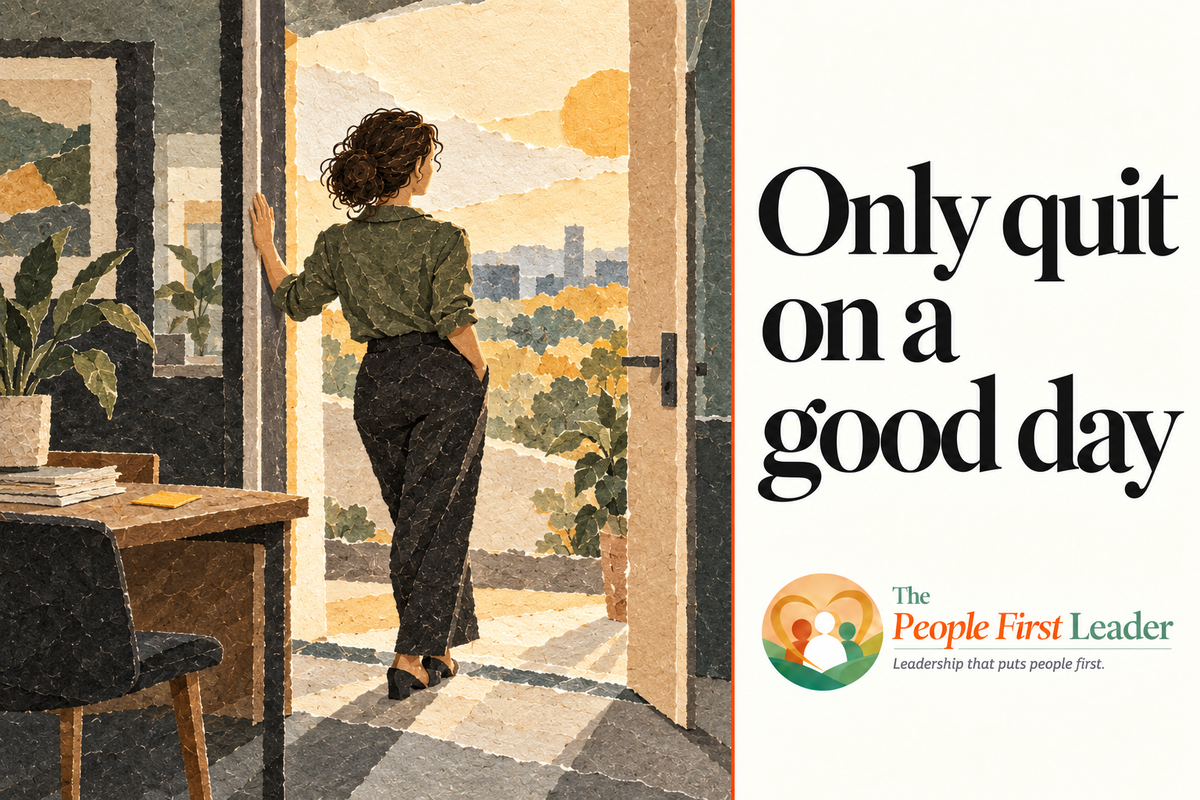
Only quit on a good day
I was in the middle of a workout last week when the trainer said something that stopped me in my tracks.
“Only quit on a good day.”
I wrote it on a Post-it note the moment I finished. It is still on my desk.
The more I sat with it, the more I realised it is not just about exercise. It is about every decision we make when we are running on empty.
The fact is we make our worst decisions on our worst days.
Think about the last time you seriously considered walking away from something. A role. A project. A commitment you had taken on with the best of intentions. What day was it? I would be willing to bet it was not your best one. It was the day after a difficult conversation. The week when nothing seemed to land. The moment you were running on three hours of sleep, a cold cup of coffee and the quiet suspicion that nobody really noticed the effort you were putting in.
That is the day most people quit and it is almost never the right one.
I think about the people inside organisations who volunteer to make things better.
I think about the person who puts their hand up to lead the Wellbeing Network, the Families Network, the Gender Network. The person who organises the events, writes the comms and takes responsibilities all on top of their actual job. They do it because they believe it matters. Because they have often been the person who needed that support and found it was not there.
And then, slowly, the enthusiasm meets reality.
Leadership does not show up to the events they promised to attend. Emails go unanswered. Budget conversations stall. The champion finds themselves defending the value of what they do to people who should already understand it. On those days quitting feels completely rational.
But here is the thing. It is not the whole story.
Then there is a different kind of day.
An event comes together. Fifty plus people turn up. Someone stays behind afterwards and says, “I really needed to hear that today” or “That was brilliant.” A colleague who had never come to anything before walks in. A leader who was skeptical sits down and actually listens.
Those are good days and you will not quit on those days. Nobody does.
So the question is not whether to stay or go. The question is: are you making that call from the right place?
Here is what I now believe about better decision-making.
If you are seriously considering stepping away from something - a role, a relationship, a commitment ensure you ask yourself one question first. What day is today? Are you tired, overlooked, burnt out, running on the last of your reserves? Sit with the decision. Do not act on it yet. The point is simply this: your lowest day is the worst possible moment to make your most important decisions.
This applies to you as a leader too.If you manage people, run teams or lead organisations, think about what state you are in when you make your big calls. The restructure decided in the middle of a funding crisis. The performance conversation held at the end of an already impossible week. The decision to let someone go made from exhaustion rather than clarity.
Bad days produce bad decisions. Not always. But more often than we like to admit. The most emotionally intelligent leaders I know are not the ones who never feel doubt or exhaustion. They are the ones who have learned to notice it and to wait.
The Post-it is still on my desk.
I see it every morning. It reminds me that the version of me who wants to give up on hard days is not always the most reliable. It also reminds me that good days exist. They always come back. And the things we nearly walked away from on a Tuesday afternoon often look very different by Friday. So if you are in the middle of something hard right now whether its a role that is not being supported, a project that is not landing or a commitment that is costing you more than you expected, I want to ask you something:
What day is it today?
Zoe Sinclair