What I’m learning about AI. And it might not be what you think
Zoe Sinclair · 9 August 2026 · 5 min read
Zoe Sinclair explores why time saved by AI can turn into more work, and what that means for our pace, wellbeing and breathing space.
What I’m learning about AI. And it might not be what you think
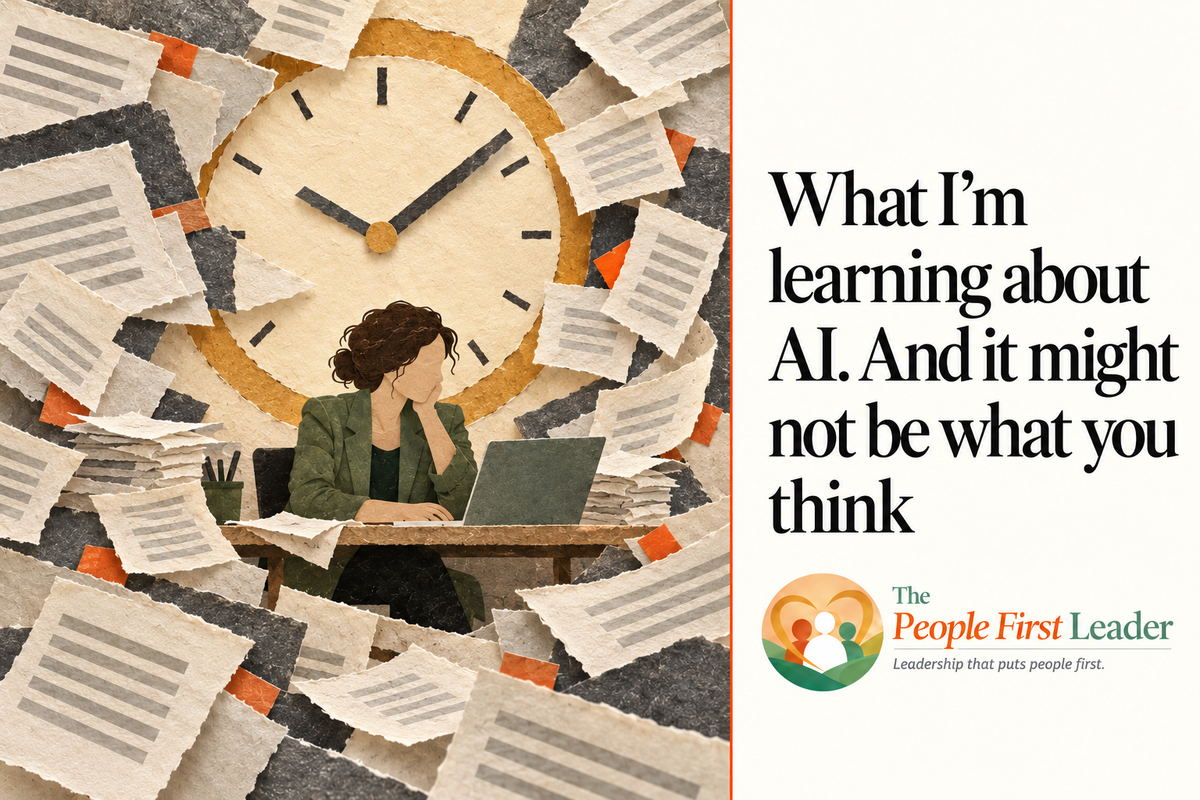
Last month, I asked an AI tool to pull together the feedback summary from one of our recent webinars, ready to send across to our clients. Cross referencing survey responses and pulling out the headlines used to take me the best part of an afternoon, if not more. This time it took about fifteen minutes.
I remember sitting back and thinking what should I do with the rest of my afternoon as I wasn’t expecting to have the spare time.
But of course, I didn’t close my laptop. I opened client proposals I needed to write, drafted a speaker outreach email and started planning next month's content calendar too. The time AI saved me disappeared into more work, not less of it.
Sound familiar?
We were told AI would hand us back our time so we had fewer mundane tasks to do and more space to think. In one sense, that’s true as the task itself does get done faster. But the time does not suddenly become free zen time. It gets filled almost immediately.
There is a name for this. Economists call it the Jevons paradox, first observed in the 1800s when more efficient steam engines led to more coal being burned, not less, because efficiency made coal cheaper to use everywhere. Apply that to a working day: when writing gets faster, more writing gets commissioned. When analysis takes an hour instead of a day, more analysis gets requested. The total volume of work in the system grows to fill the space it left behind.
It’s called pace inflation. The pace of everything creeps up until it feels normal.
This is not just a feelingIhave. Microsoft's 2026 Work Trend Index, based on a survey of 20,000 workers across ten countries, describes what it calls the Transformation Paradox. Employees are ready to change how they work. The systems around them are not built to let that change stick. Only 13 per cent of AI users say they are actually rewarded for redesigning their work with AI. The saved time gets absorbed into the old targets instead.
Closer to home, a UK survey by HR platform HiBob, reported by HRreview this July, found that 58 per cent of workers say the demands of their role have increased over the past two years, and 51 per cent say they now get less recovery time between busy periods than they used to. I am finding there is no longer a quiet season.
None of this means AI is the villain. I use it every single day, and it has genuinely changed what I am able to produce for my businesses. But I have started recognising that whilst everything is getting faster I am not doing anything with the time it frees up. In fact, I am only giving myself more to do. I am not saving any time at all. I have just raised my own bar for what a normal day now looks like.
If you are in HR, or you run an ERG, or you manage a team, this matters beyond your own to-do list. Mundane tasks were never just mundane. They gave us pockets of low-stakes thinking time, small breathing room between the things that actually demanded our full attention. Take those pockets away without replacing them with anything, and you do not get more space. You get a faster treadmill.
I am not suggesting anyone hands back their AI tools. I would not hand back mine. But I think there is real value in noticing what we do with the time they free up, individually and as organisations. From my point of view, AI is not giving me back time.
I would love to know what you have noticed in your own working week. Has AI actually slowed your pace down, or has your pace gone up?
Zoe Sinclair